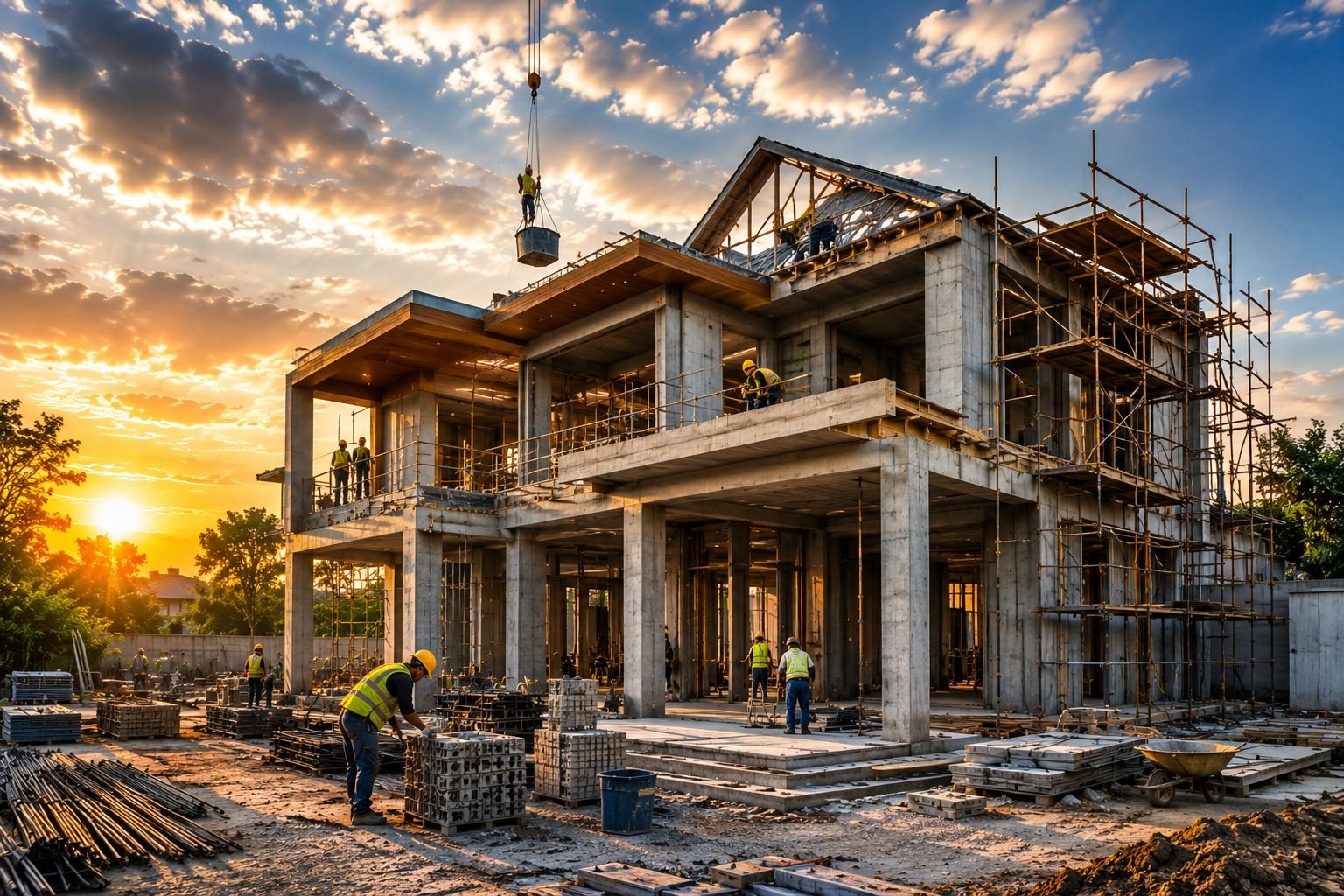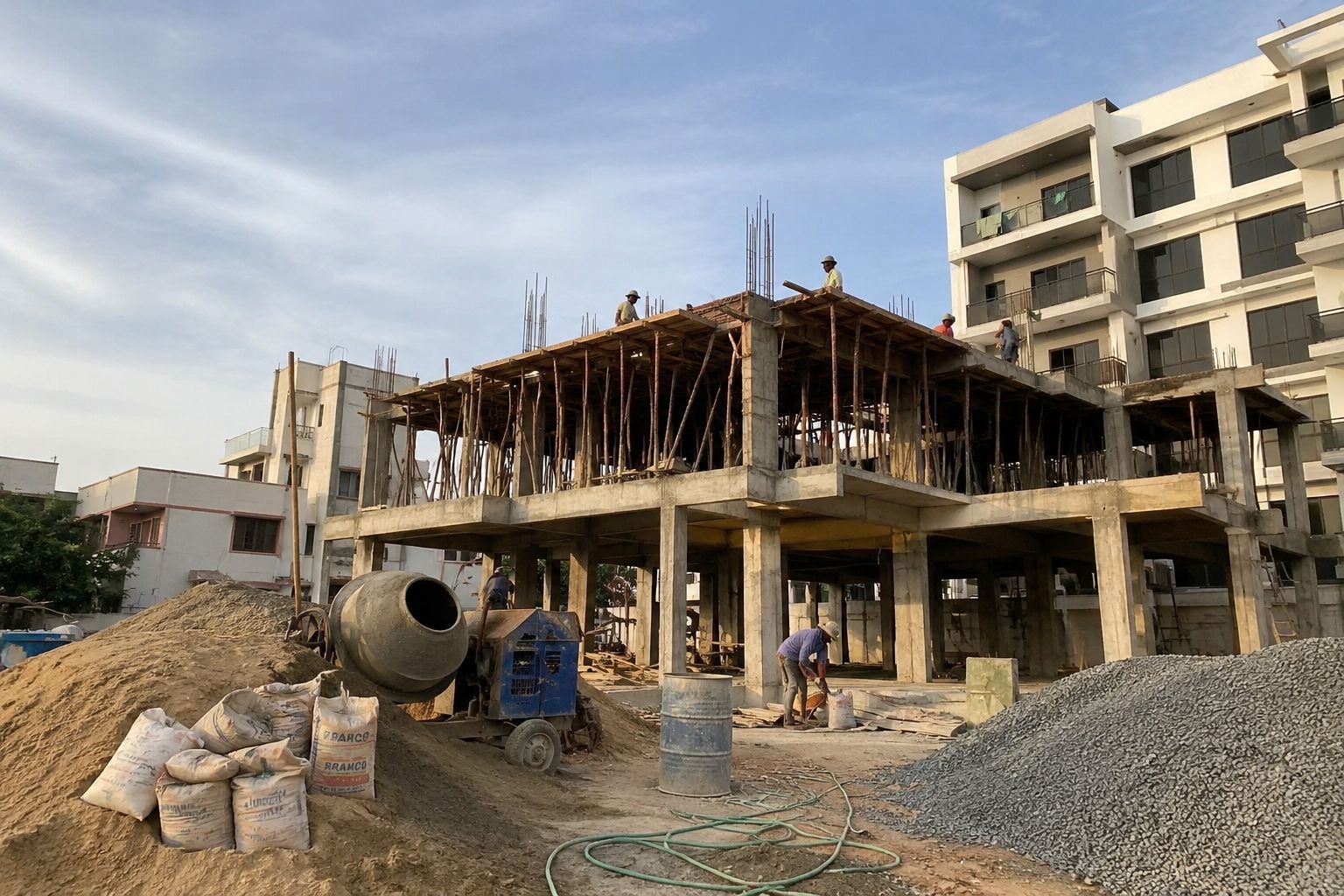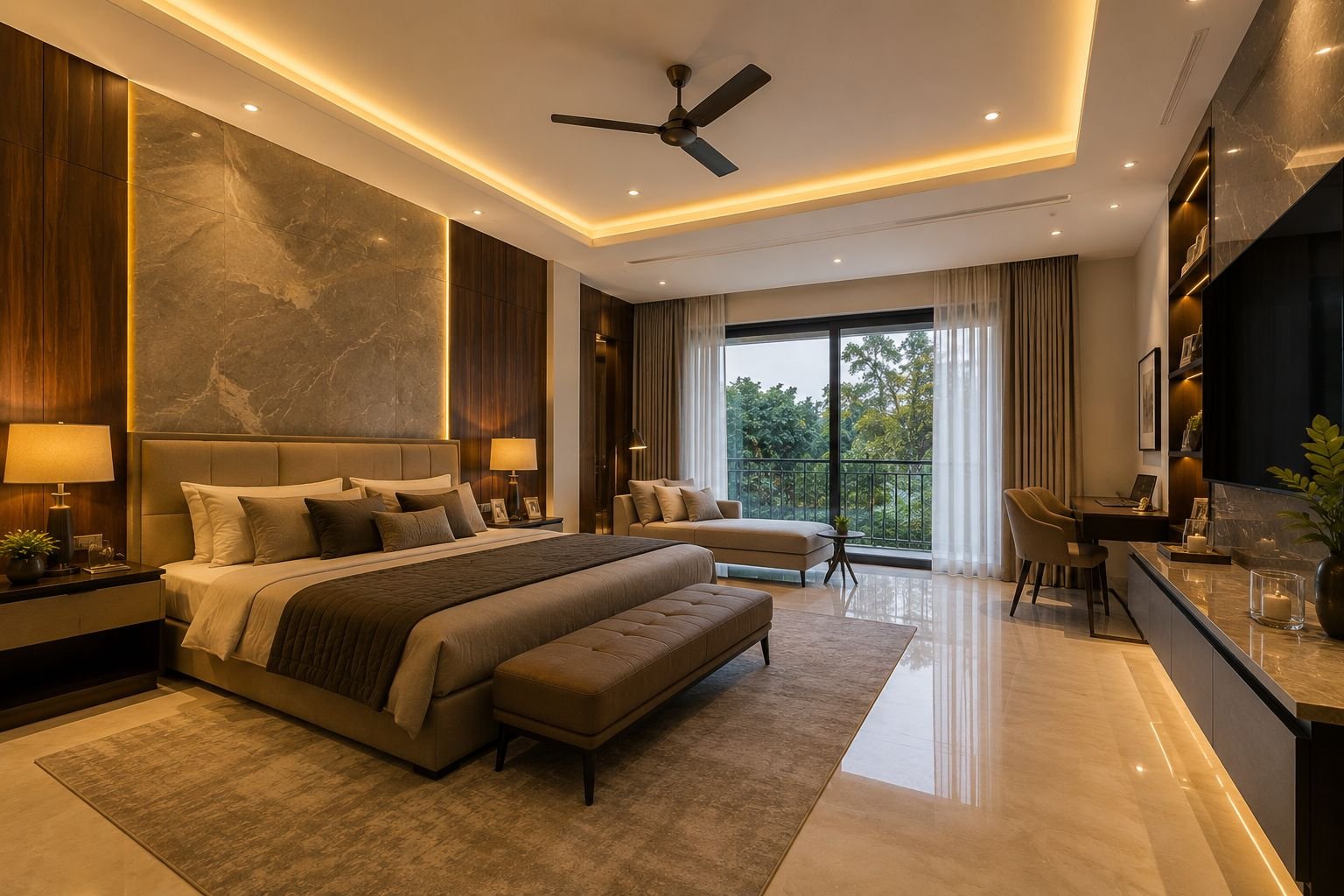




A higher budget does not automatically guarantee structural durability, nor does a restricted budget mean compromising on safety or aesthetics. By understanding value engineering and choosing materials strategically, you can significantly lower building expenses. Whether you are an investor looking to maximize returns or a first-time homebuyer planning your primary residence, these practical low-budget house construction tips bangalore will help you optimize your expenses from layout planning to final handover.
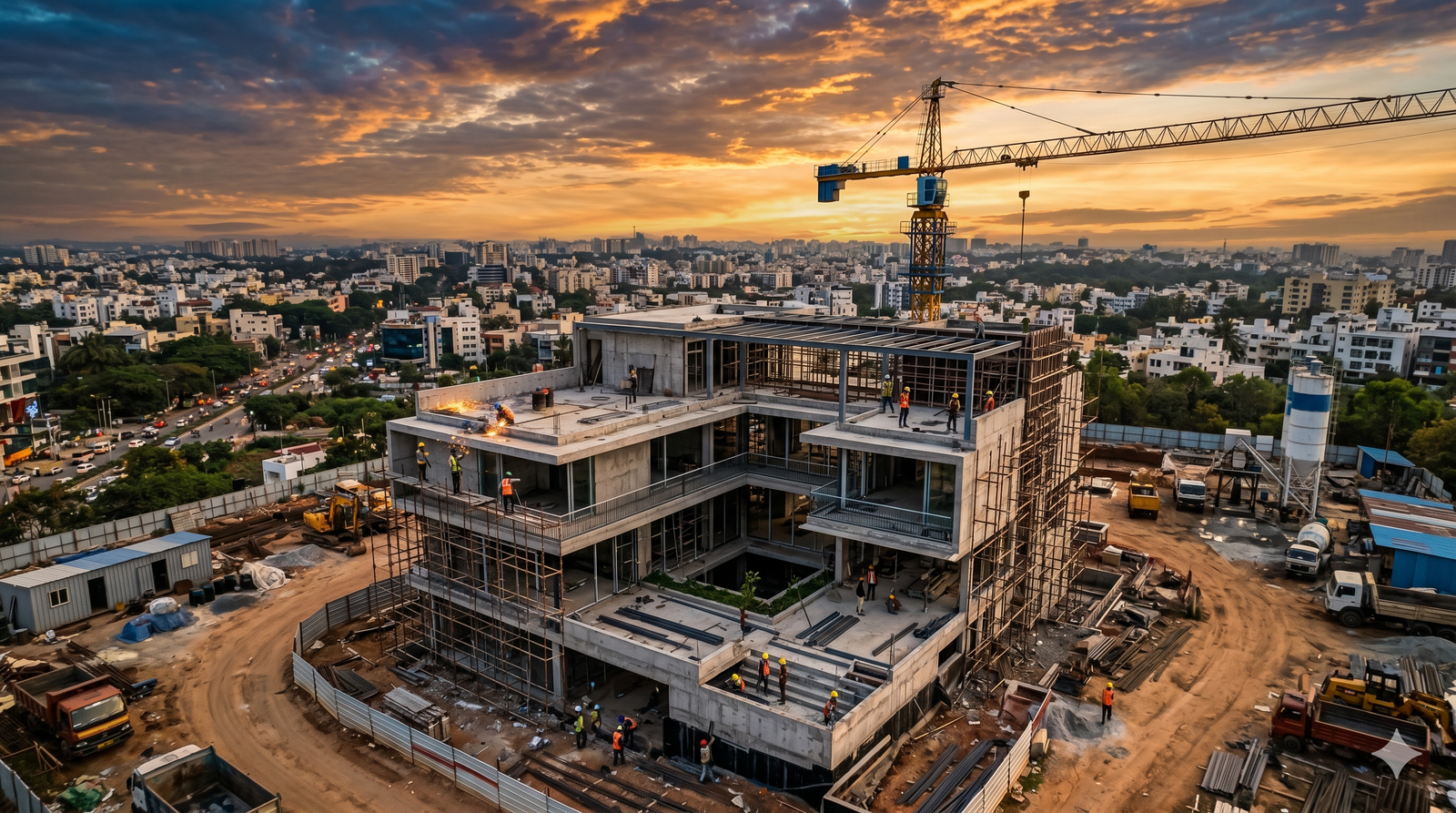
Key Strategies for Low-Budget House Construction in Bangalore
The smartest way to minimize construction costs starts well before breaking ground. Your choice of architectural geometry, material sourcing, and project management model all play a major role in determining your final expenses. Here are the three pillars that drive real savings:
- Clean square or rectangular floor plans
- Uniform beam & column spans
- Reduced steel cutting waste
- Reusable concrete formwork panels
- Simplified load paths, faster masonry
- Solid concrete or interlocking blocks
- Local sourcing from Peenya / Hosur
- Branded vitrified tiles over marble
- Lower mortar consumption
- Reduced freight & transport charges
- Fixed Bill of Quantities (BoQ)
- Single point of contact accountability
- Scheduled, penalty-backed timelines
- Builder-managed BBMP / BDA liaison
- Protection from price creep
Critical Note: These savings strategies apply to structural build, foundational layout, masonry, and basic electrical/plumbing installations. Optimizing these stages early is what makes affordable construction possible without compromising long-term durability.
Where Your Construction Budget Goes
To prevent unexpected mid-project overruns, it helps to understand how a typical residential budget is split. Raw building materials alone consume nearly 50% to 60% of your entire budget — which is exactly why smart material choices matter so much for low-budget house construction tips bangalore homeowners rely on:
Material Allocation (50–60%): Transitioning from traditional wire-cut clay bricks to solid concrete or interlocking blocks cuts mortar consumption and speeds up installation, lowering daily labor overheads as well.
Labour Charges (20–30%): Using standard layout dimensions with uniform spans simplifies work for site crews and reduces material waste — a direct, low-effort way to control labour costs.
Architectural & Engineering Fees (5–10%): A professional soil test upfront gives your structural engineer the precise load-bearing capacity of your plot, often allowing cost-effective isolated footings instead of expensive deep pile foundations.
Material Budget Savings Potential
Making minor, data-driven adjustments to your material choices can lead to substantial long-term savings without sacrificing structural quality:
├── Structural Blocks vs. Traditional Clay Bricks: Save 10% – 15% on Mortar
├── Local Sourcing (Peenya / Hosur Outskirts): Eliminate High Freight Fees
└── Flooring (Branded Vitrified vs. Raw Granite): Save ₹80 – ₹150 Per Sq Ft
Scenario A: Switching to Concrete Blocks
Traditional wire-cut clay bricks are expensive to transport and require more mortar due to size variations. Transitioning to high-quality solid concrete or interlocking blocks cuts mortar consumption and accelerates installation speeds, lowering daily labor overheads.
Scenario B: Sourcing from Local Industrial Corridors
Transporting heavy bulk materials across long distances can quickly inflate your budget with high freight charges. For Bangalore projects, sourcing from nearby corridors like Peenya, Jigani, or the outer limits of Hosur eliminates much of this overhead.

Structural and Operational Cost-Saving Tips
Managing how work happens on-site is just as important as selecting budget-friendly materials. Poor planning can quickly lead to expensive mistakes and material waste. One of the most common causes of budget overruns is cutting into freshly built walls to install missed conduit pipes or plumbing lines — make sure your complete electrical routing maps and plumbing lines are locked in before pouring concrete slabs.
Additionally, investing in a professional soil test first gives your structural engineer the precise load-bearing capacity of your plot. In rocky, stable zones like parts of North Bangalore or Mysuru's Srirampura, you can safely use cost-effective isolated footings, avoiding the heavy expenses of deep pile foundations.
Navigating Hidden Expenses: Statutory Clearances and Approvals
Hidden regulatory fees and plan approvals from municipal bodies like the BBMP, BDA, or MUDA can catch many builders off guard. Ensuring your building plans follow local bylaws exactly prevents illegal extensions and municipal fines, keeping your regulatory costs in check.
├── G+1 Residential Plan Sanction: ₹80,000 – ₹1,00,000
├── G+2 to G+3 Vertical Extensions: ₹2,50,000 – ₹3,00,000
└── G+4 Intensive High-Rise Builds: ₹3,00,000+
Practical Low-Budget House Construction Tips Bangalore
Here are the four core habits that consistently help homeowners build smarter without compromising on quality or safety:
- 1Optimize Spatial Engineering — Complex, multi-angled blueprints with irregular protrusions require intricate structural frameworks and custom shuttering. Choosing a clean square or rectangular floor plan maximizes carpet area while minimizing wall perimeter lines, lowering baseline structural costs by 10% to 15%.
- 2Choose Cost-Effective Building Materials Wisely — Transitioning to solid concrete or interlocking blocks, sourcing locally from corridors like Peenya or Hosur, and opting for branded vitrified tiles over natural marble can save ₹80 to ₹150 per square foot on flooring alone.
- 3Lock In Electrical & Plumbing Routes Early — Planning appliance and automation node placement, plus complete plumbing lines, before pouring concrete slabs prevents costly wall cutting and repair work later.
- 4Utilize the Turnkey Construction Model — Managing multiple separate sub-contractors can lead to uncoordinated work, delays, and material theft. A unified turnkey partner locks material specifications and labor timelines into a legally binding contract before work begins.
Turnkey vs. Self-Managed Construction: Key Comparison
Working with a unified turnkey partner provides clear, transparent pricing and protects your construction budget from the "price creep" that regularly plagues self-managed projects:
| Factor | Turnkey Construction | Self-Managed / Labour Contract |
|---|---|---|
| Cost Predictability | Fixed BoQ pricing | Frequent price creep |
| Material Procurement | Bulk savings, less waste | Market rate purchases |
| Accountability | Single point of contact | You manage everything |
| BBMP / BDA Approvals | Builder handles liaison | You coordinate directly |
| Timeline Control | Penalty clauses for delays | No formal commitment |
| Overall Project Savings | 8% – 12% lower total cost | Higher risk of overruns |
Conclusion
Building an affordable home does not mean you have to compromise on quality, style, or structural safety. By focusing on smart design choices, picking materials strategically, and planning your site execution carefully, you can easily build a beautiful home that fits your budget. Following these low-budget house construction tips bangalore consistently is about value engineering, not cutting corners.
At Cherish Happy Home, we specialize in helping families across Bangalore, Mysuru, and wider Karnataka bring their visions to life through transparent, reliable, and cost-effective building solutions. We ensure your total construction blueprint is executed on time, with zero hidden charges. Contact us today to book your free, professional consultation.
Frequently Asked Questions
Ready to Build Your Dream Home on a Smart Budget?
Our expert team is just one click away. Get a free consultation and customised quote with full transparency — no obligations.
Get Free Enquiry